I'm 37, I live in a Brooklyn studio, and the pan that finally fits my kitchen is also the only one I use.
I have 3.2 square feet of counter space. I owned a $35 nonstick that died last December. The replacement showed up factory-seasoned, weighs half what a cast iron does, and has not left the stovetop in five months.

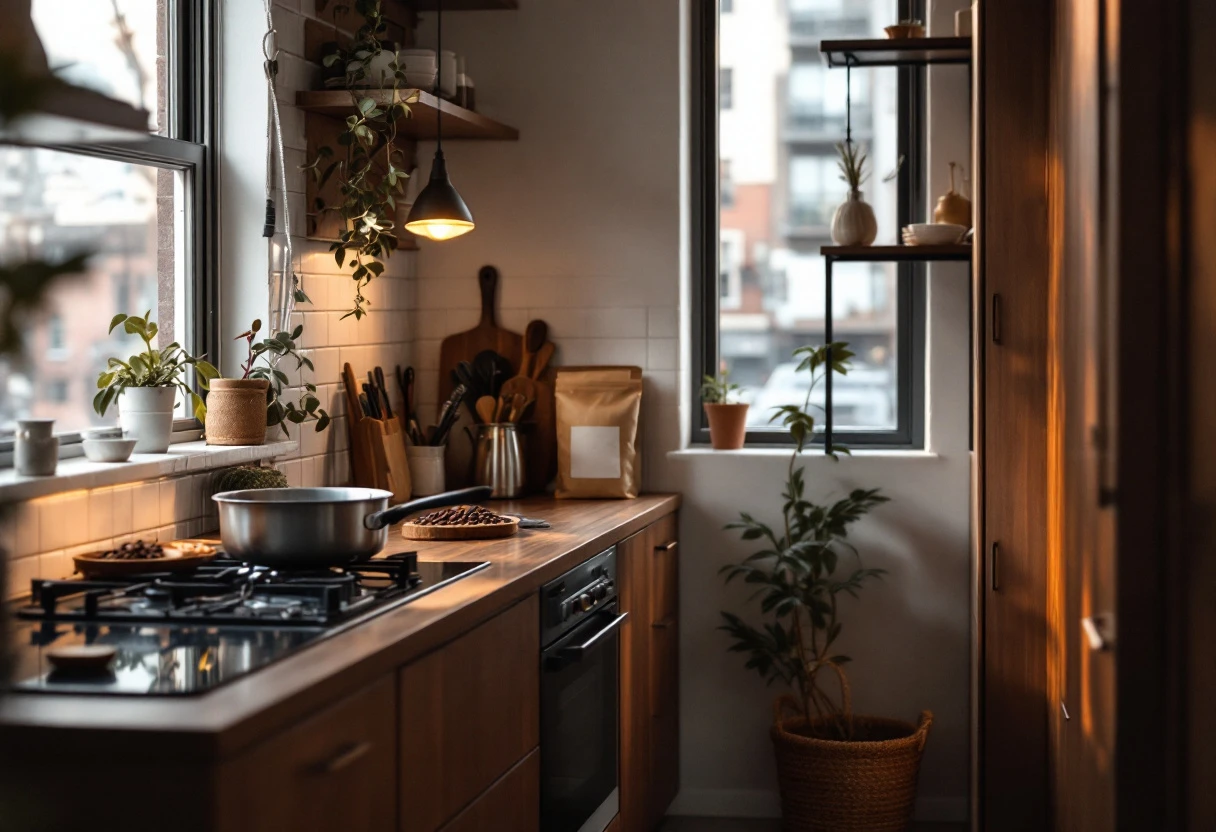
If you're reading this from a 1,200-square-foot house in the suburbs, you can probably skip it. This article is for the people who live in apartments where the kitchen and living room are the same room, where the oven shares a wall with the bed, where you have made peace with the fact that you will never own a stand mixer. There are a lot of us. We get short-shrifted by cookware reviews.
I am one of you. I live in a fourth-floor walkup in Crown Heights. My kitchen is one corner of the same room I sleep in. I have 3.2 square feet of counter space — I measured it once during an argument about whether I could justify owning a wok. I cook for myself five nights a week because takeout in Brooklyn is shockingly expensive once you factor in delivery fees and the fact that I drink water and there's no markup on water.
For nine years I owned a single $35 nonstick pan from Target. It worked. Eggs slid off it. Vegetables sautéed in it. It was light enough to put away under the sink with my pots. In December 2024 the coating started peeling — small flecks coming off in the food, which is the polite way of saying "the Teflon is in my dinner now."
I needed a new pan. I had three constraints, in this order:
These four things together rule out almost everything Wirecutter and Reddit recommend. Cast iron — beautiful, durable, heritage — weighs 7 pounds in a 12" size. I can flip my Lodge with two hands and I throw out my back doing it. Stainless multi-ply — All-Clad, Made In, Misen — is great but expensive and has its own learning curve. The "new generation nonstick" stuff (HexClad, Caraway, etc.) is just Teflon with a marketing budget; I've watched enough YouTube to know.
I had heard of carbon steel from cooking videos but I'd always written it off as a "pro chef thing." I was wrong about that. It turns out it was the obvious answer to all four of my constraints, and I'd just never bothered to look at it seriously.
The pan that ended my cookware search
A friend at work who's an actual chef — the kind who worked in a real kitchen for ten years before going into corporate sales — heard me complain about the nonstick situation and said two words: "carbon steel." I went home and went down the rabbit hole and ended up emailing a small Portland company called Cam Cookware. They make French-rolled carbon steel pans. The 12" weighs 3.5 lb. It costs $119. It ships factory-seasoned.
They sent me one to try. I've been cooking on it for five months. Some short observations:
The weight thing is real
3.5 pounds is the same as a large Macbook Pro. I can pick it up with my off hand while doing something else with my dominant. My Lodge weighed 7.4 lb and I have a documented wrist injury from trying to flip a pancake in it in 2022. The Cam pan I can flip eggs in. One-handed. Standing at a stove that's two feet from my bed.
It heats up like a sports car
This is the part nobody warned me about. I'm used to my old nonstick taking maybe 90 seconds to get hot enough to cook on. Cast iron takes 4-5 minutes. The Cam pan is hot enough for eggs in about 70 seconds on medium-low. This matters more than I thought it would when you're cooking on a single-burner shared with your roommate's tea kettle.
The patina is the nonstick
Carbon steel pans develop a natural polymerized seasoning that acts like nonstick. The Cam came factory-seasoned (which I appreciated because doing it from scratch involves the smoke alarm) and the patina deepens with use. Five months in, my eggs slide off it the way they used to slide off the new nonstick — and I never have to throw it away when the coating fails, because it doesn't have one to fail.
It lives on the stovetop now
This is the surprise: I used to put the nonstick away in the drawer after dinner because it had a non-stick coating I didn't want to dent. The Cam pan is just steel. It can sit on the stovetop indefinitely. I haven't put it away since week two. My counter space gained back the square footage the pan used to occupy when stored, because the pan now lives where it's used.
What I cooked in 5 months
Rough mental inventory of what's gone through this pan since January 2026, in approximate frequency order:
It can do everything I cook. It does most things better than my old nonstick did, with the exception of pancakes — which require a smooth, even, lower-temperature surface that cast iron does best. I'd guess a more practiced carbon-steel cook than me could nail pancakes in this pan, but I'm not there yet.
The pan I've been cooking on, in case the math fits.
The Cam Cookware 12-inch carbon steel pan is $119, factory-seasoned, ships free over $99, 30-day return. They also make a 10" at $89 (which would be even better if your kitchen is smaller than mine). I get a small commission if you buy through this link; it doesn't cost you anything extra.
See the pan on Cam Cookware →For people like me specifically
I want to make this useful to other apartment cookers, because I never see this market segment addressed in cookware reviews. If you are:
A small-kitchen renter: Get the 10". It does 90% of what the 12" does and fits in basically any oven, drawer, or cabinet. Half the weight of the equivalent cast iron. Half the price of a comparable Made In or Misen.
Someone whose nonstick is dying: Don't replace it with another nonstick. The lifecycle of nonstick is 3-5 years and you'll be reading this again in 2030. Carbon steel lasts a literal lifetime if you don't drop it off a balcony.
Someone who already owns cast iron but never reaches for it because it's heavy: Hi. Same. Get the carbon steel and keep the cast iron for the once-a-month skillet cornbread you make when your parents visit.
Someone considering the All-Clad / Made In / Misen tri-ply route: Carbon steel is half the price and arguably better for searing. The trade-off is you have to dry it and oil it after washing — about 45 seconds of post-meal effort. If that's not a dealbreaker, you save $80-200 versus the stainless options.
The dumb things I worried about that turned out to be fine
"Won't it rust in my humid Brooklyn apartment?" Yes if you leave it wet. No if you dry it for 30 seconds on the burner and wipe a thin layer of oil on it. The whole post-cook routine is 90 seconds. I've had zero rust issues in five months. (I had two minor rust spots in week one when I forgot to dry it twice. Wiped with steel wool, re-seasoned, moved on with my life.)
"Don't you have to season it constantly?" No. It came factory-seasoned. I wipe oil on it after washing. Maybe once every two months I do a 20-minute oven seasoning where I bake a thin layer of flaxseed oil at 480°F. It's not constant.
"Isn't it bad for acidic foods?" If you cook tomato sauce in it for 3 hours, yes, the acid will strip some seasoning. If you deglaze with a splash of wine for 2 minutes, no, nothing happens. Don't make tomato sauce in carbon steel. Make tomato sauce in your Dutch oven. (I don't own a Dutch oven. I make tomato sauce in a stock pot. We all make do.)
What I'd tell past me
For all the years I owned that disposable nonstick, I assumed cast iron was the only "grown up" option and that it was too heavy for my apartment lifestyle. I didn't know carbon steel was a thing. The professional cooking world has known for decades that carbon steel is the answer for working kitchens that can't carry cast iron weight all shift. Restaurants run carbon steel for the same reason apartment renters should.
If you're in a small kitchen and you're tired of the disposable-nonstick cycle but you can't realistically lift cast iron and don't want to spend $200 on tri-ply stainless — try this. Worst case you have a pan you don't use much. Best case you have the only pan you reach for, five months later, writing about it on a Tuesday afternoon.
Check current pricing on Cam Cookware →
Liam Park
Liam writes about apartment living, small kitchens, gear that fits, and the underdiscussed reality of cooking in 480 square feet. He's a software engineer by day and reviews things on his own time. Email: liam@liamliving.com.
FULL DISCLOSURE
This article is sponsored content produced in partnership with Cam Cookware Co. Cam Cookware provided the 12-inch carbon steel pan reviewed here free of charge in January 2026. The author was not paid a flat fee for writing this article. Liam Living receives an affiliate commission on any verified sales generated by clicks from this article (10% of net sale amount).
Cam Cookware Co. did not have copy approval over this article. The opinions, comparisons, and apartment-renter perspective reflect the author's personal experience over five months of regular use in a small-kitchen rental in Brooklyn, NY. The cooking inventory numbers are approximate based on the author's recollection.
Individual cooking experience will vary. Carbon steel cookware requires hand-washing, periodic re-oiling after use, and is not dishwasher safe. Suitability for any specific cooking style depends on the user's habits, kitchen layout, and willingness to maintain the patina.
Liam Living is an independent publication and accepts sponsorship from 1-3 brands per quarter, only for products the author has personally used for at least 60 days before agreeing to write. All sponsored articles carry the "SPONSORED" tag at the top, a disclosure block, and a full disclosure in this format at the foot. We do not accept undisclosed sponsorship.